
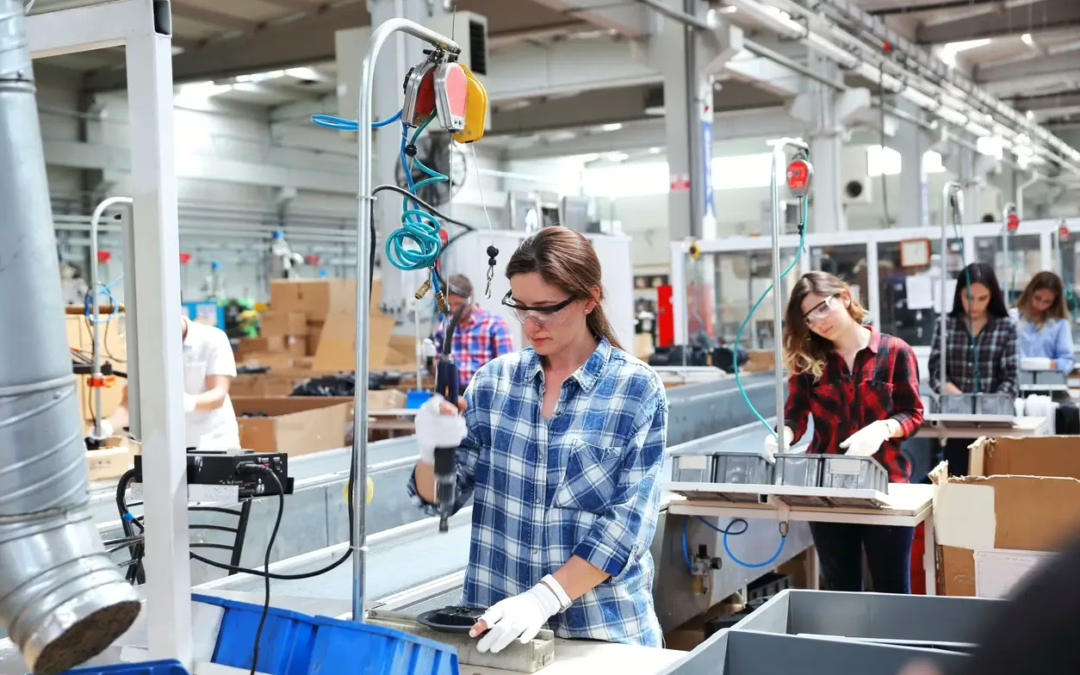
Every minute counts on a busy production floor. When workers have to step away from their stations to gather scattered parts, you lose valuable time and money. This is where a structured approach to organizing components becomes vital for lean operations. If you want to reduce inefficiencies and improve your daily workflow, you need to understand what kitting in manufacturing actually means and how it can transform your facility.
So, what is kitting in manufacturing? Kitting in manufacturing is the process of grouping and organizing individual components into ready-to-use kits that streamline production and assembly. Instead of picking parts one by one as they are needed, workers receive a single package containing exactly what they need to complete a specific task or build a product.
This simple but powerful shift is critical in lean manufacturing. It removes bottlenecks and keeps assembly lines moving at a steady pace. By utilizing manufacturing kitting solutions, facilities can drastically cut down on wasted movement. Whether you manage operations in-house or partner with providers for kitting and assembly services, implementing this strategy is a proven way to boost your bottom line.
Understanding the Kitting Process
The kitting process in manufacturing requires careful planning and precise execution. It shifts the burden of sorting and gathering parts away from the assembly line and into a dedicated preparation area.
A standard step-by-step breakdown of the kitting process in manufacturing looks like this:
- Picking: Warehouse staff pick individual components from inventory based on a specific bill of materials.
- Assembling: Workers group these parts into organized containers or bins.
- Staging: The prepared kits are staged for production and delivered to the assembly line exactly when needed.
This workflow relies heavily on integration with warehouse and inventory management systems to ensure part availability. Many facilities use specialized manufacturing kitting carts to transport these grouped parts safely and efficiently to the line. Applying lean principles to this process ensures that workers spend less time searching for parts and more time building the final product.
Examples of Kitting in a Manufacturing Process
To see the value of kitting manufacturing strategies, it helps to look at practical, real-world examples across different sectors.
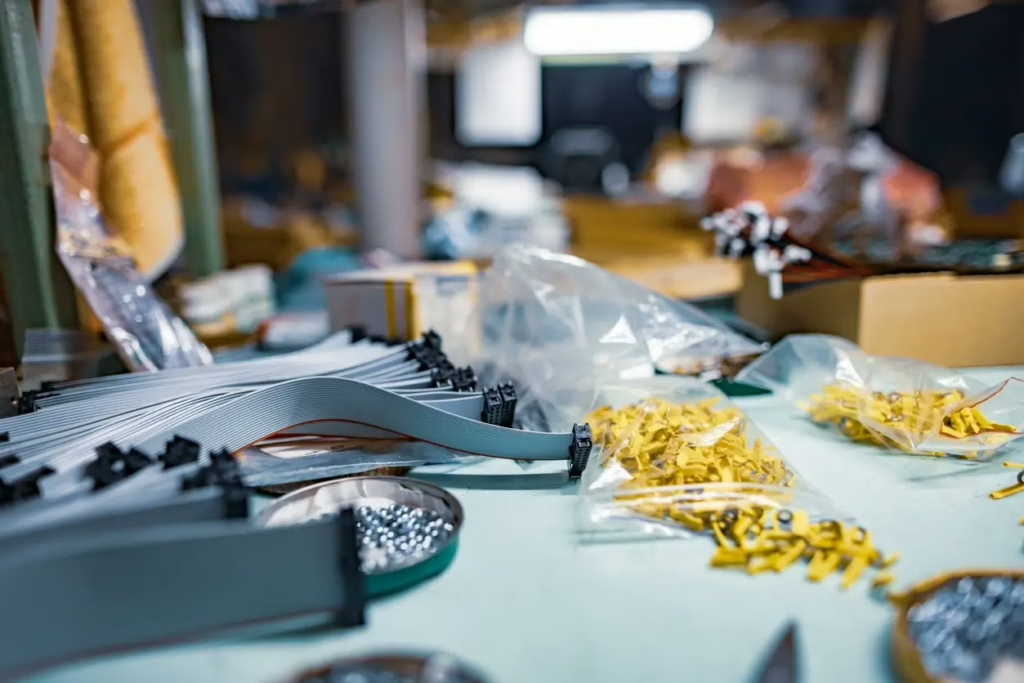
- Electronics Manufacturing: Kitting in electronics manufacturing often involves gathering tiny, highly specific components like circuit boards, resistors, and capacitors. A pre-assembled component kit ensures that workers building a device have every precise piece ready at their workstation, preventing errors.
- Automotive Assembly: Building a car requires thousands of parts. Kitting allows facilities to group parts per vehicle unit. For instance, an operator installing a dashboard will receive a single kit containing the exact screws, panels, and wiring harnesses needed for that specific vehicle trim.
- Food Manufacturing: Custom kitting services in food manufacturing group specific pre-measured ingredients for batch production. This ensures recipe consistency and speeds up the mixing process while maintaining strict hygiene standards.
Applications of Kitting Across Industries
Kitting is highly versatile and supports various industries looking to optimize their daily output.
- Manufacturing: Streamlining assembly lines and reducing downtime is a top priority. Preparing parts in advance ensures continuous movement. (Learn more about manufacturing support solutions)
- E-commerce & Distribution: Bundling products for faster fulfillment allows warehouses to ship orders quickly during peak seasons. (Explore our e-commerce fulfillment services)
- Automotive & Industrial: Providing pre-configured parts for complex builds reduces the margin of error and keeps heavy industrial production on track. (See the industries we serve)
Benefits of the Kitting Process in Manufacturing
The benefits of kitting in manufacturing extend far beyond simple organization. When implemented correctly, it creates a ripple effect of positive outcomes across your entire operation.
Improved Efficiency and Productivity
Kitting drastically reduces the time workers spend searching for parts. When operators have everything they need within arm’s reach, it naturally speeds up assembly lines and increases daily throughput.
Reduced Errors and Better Quality Control
Mistakes happen when workers have to pick parts on the fly. Standardized kits reduce picking mistakes because the sorting happens in a controlled environment beforehand. This improves consistency and ensures higher quality control for the final product.
Streamlined Inventory Management
Kitting requires you to maintain a close eye on your stock. Grouping parts into kits provides better tracking of components. It gives warehouse managers clear visibility into stock levels, which reduces both overstocking and unexpected shortages.
Faster Time-to-Market
When you eliminate assembly delays, you accelerate your production cycles. Pre-prepared kits allow you to move products from raw materials to finished goods much faster, helping you meet customer demands without delay.
Cost Savings
Efficiency directly translates to money saved. Kitting lowers labor costs by reducing the time highly paid assembly workers spend doing basic sorting tasks. It also minimizes material waste and prevents costly production halts.
Common Challenges in Kitting
While the benefits are clear, setting up a successful kitting operation does come with hurdles. Understanding common kitting challenges manufacturing leaders face can help you prepare.
Inventory inaccuracies are a major roadblock. If your system says a part is in stock but it is actually missing, the entire kit cannot be completed. Space constraints in the kitting area manufacturing floor also pose a problem, as you need dedicated room to build and stage the kits. Furthermore, labor inefficiencies during the sorting process, poor process design, and demand variability can easily disrupt your workflow if you do not plan ahead.
Improving the Kitting Process
To overcome these challenges, facilities must actively refine their approach. Automation and digital tools can take the guesswork out of building kits. Applying lean manufacturing principles helps strip away unnecessary steps in the sorting phase.
Standardized workflows are essential. Every worker should follow the exact same procedure when assembling a kit. Furthermore, utilizing real-time inventory tracking ensures you never run out of critical components. For many companies, utilizing external kitting and assembly services manufacturing partners offers the easiest path to improvement without straining internal resources.
Inventory Management Strategies for Kitting
Operational excellence in kitting depends heavily on your inventory strategies. Just-in-time (JIT) inventory pairs perfectly with kitting, ensuring you only bring in parts right before you need to bundle them.
Implementing barcode and RFID tracking gives you pinpoint accuracy over where every component is located. You should also focus on warehouse layout optimization, keeping high-volume parts close to the kitting stations. Finally, seamless integration with your ERP or WMS systems guarantees that your data always reflects your physical stock.
How Kitting Services Support Scalable Manufacturing
Managing kitting internally takes time, space, and labor. Outsourcing to a dedicated logistics partner offers incredible flexibility and scalability. When production demands spike, a third-party provider can easily scale up their kitting volume to match your needs.
Valley Distribution & Logistics offers reliable kitting and assembly services that provide quality assurance and deep industry expertise. By partnering with us, you can keep your factory focused entirely on final assembly and product innovation while we handle the sorting and staging.
Is Kitting Right for Your Manufacturing Operation?
If your assembly line frequently stalls because workers are hunting for parts, it is time to make a change. High error rates and cluttered workstations are clear signs that you need a structured kitting program.
Deciding when to outsource versus manage kitting in-house depends on your available space and labor. Consider the ROI of freeing up your production floor and reducing assembly times. When you are ready to optimize your workflow and cut production costs, reach out to Valley Distribution & Logistics to explore how our manufacturing support services can transform your operations.
FAQs for Kitting in Manufacturing
What does kitting mean in manufacturing?
It is the process of gathering, organizing, and packaging individual components into a single, ready-to-use kit that is delivered directly to the assembly line.
How do I know if my manufacturing operation needs kitting?
If your workers spend significant time searching for parts, if you experience frequent assembly errors, or if your workstations are severely cluttered with inventory, kitting can help.
How do I measure the success of a kitting program?
You can measure success by tracking metrics like reduced assembly time, fewer picking errors, lower labor costs, and improved inventory accuracy.
What industries benefit most from kitting?
Automotive, aerospace, electronics, consumer goods, and food manufacturing see the most significant benefits due to their complex assembly needs and strict quality controls.What is the difference between kitting and assembly?
Kitting is the act of gathering and grouping the necessary parts together. Assembly is the subsequent process of actually putting those grouped parts together to build the final product.