
If your business is growing faster than your production capacity, you might be looking for a way to scale without building new facilities.
So, what is contract manufacturing? Contract manufacturing is the process of outsourcing the production of goods to a third-party manufacturer under a formal agreement. Instead of handling every step of production in-house, companies partner with a contract manufacturing organization (CMO) to bring their products to life.
This process plays a crucial role in modern supply chains, fueling globalization and allowing brands to scale efficiently. You might also hear this practice referred to as third-party manufacturing or outsourcing production. Regardless of the exact term, the goal remains the same: delegating production to specialists so you can focus on growing your brand.
Why Businesses Use Contract Manufacturing Today
Companies across nearly every sector rely on contract manufacturing services to stay competitive. Building and maintaining a dedicated manufacturing facility requires massive capital investment. By outsourcing, you turn fixed costs into variable costs.
Businesses choose this route for several key reasons:
- Cost efficiency and scalability: You do not have to buy heavy machinery or hire a massive production staff.
- Access to specialized expertise: Certain industries require highly specific knowledge, such as cleanroom environments for pharmaceutical contract manufacturing.
- Speed to market: Established contract manufacturing companies already have the infrastructure in place to launch products quickly.
We see this collaboration heavily utilized in supplements, electronics, and cosmetics. A strategic contract manufacturing collaboration allows brands to innovate rapidly while leaving the heavy lifting to production experts.
How Does Contract Manufacturing Work?
Outsourcing your production follows a structured workflow to ensure quality and compliance. Here is a clear look at the standard process:
- Product Design & Specifications: You start by defining exactly what you need. You provide blueprints, formulations, or CAD designs.
- Vendor Selection: You research and vet various contract manufacturing companies to find a partner that matches your industry and volume needs.
- Agreement & Compliance Requirements: Both parties sign a detailed contract. This includes non-disclosure agreements, pricing, and quality standards. Regulatory compliance is especially critical here, particularly for medical device contract manufacturing.
- Production & Quality Control: The CMO sources materials, builds the product, and runs rigorous quality assurance systems to ensure every unit meets your standards.
- Distribution & Logistics: Finally, the finished products are packaged and shipped. Many companies rely on retail distribution services to move products straight from the manufacturing floor to store shelves or fulfillment centers.
When Should You Use Contract Manufacturing?
How do you know if it is time to hire a contract manufacturing organization? Consider these common scenarios:
- Scaling production quickly: If a product goes viral, you need to meet demand fast. A CMO can ramp up production much faster than you can build a new factory.
- Lack of in-house facilities: Startups rarely have the capital to build proprietary plants.
- Entering new markets: If you want to test a new product line, contract manufacturing services reduce your financial risk.
- Regulatory-heavy industries: Navigating FDA requirements is tough. Partnering with seasoned experts in pharma or nutraceuticals ensures you meet all legal standards without trial and error.
Types of Contract Manufacturing
Manufacturing models vary widely based on your industry and the scope of services you require.
Private Label Manufacturing
In this model, a manufacturer produces goods that are sold under your brand name. The manufacturer already has a proven formula or product design. This is highly popular in the supplements and cosmetics industries.
Component Manufacturing
Sometimes, you only need to outsource specific parts of a product. An automaker might manufacture the car frame but outsource the microchips to a component manufacturer.
Full-Service Contract Manufacturing
Also known as turnkey manufacturing, this covers end-to-end production. The CMO handles everything from sourcing raw materials to final packaging and logistics.

Industry-Specific Contract Manufacturing
Different sectors require vastly different capabilities.
Medical Device Contract Manufacturing
Producing medical equipment requires strict regulatory compliance, including FDA approvals and ISO certifications. These facilities focus heavily on precision, validation requirements, and cleanroom environments. Proper medical device logistics are then needed to transport these sensitive items safely.
Pharmaceutical Contract Manufacturing
This involves drug formulation, stability testing, and secure packaging. Pharma CMOs must adhere to strict Current Good Manufacturing Practices (cGMP).
Nutraceutical & Supplement Contract Manufacturing
The wellness industry relies heavily on nutraceutical contract manufacturing. Whether you need dietary supplement contract manufacturing or specialized probiotics contract manufacturing, these partners handle ingredient sourcing, blending, encapsulating, and bottling.
ElectronicContractManufacturing
Electronic contract manufacturing handles complex tasks like printed circuit board (PCB) assembly, component sourcing, and testing for consumer and industrial electronics.
Cosmetics Contract Manufacturing
Cosmetics manufacturers provide formulation support, color matching, and custom branding packaging for beauty and skincare lines.
Contract Manufacturing Examples
To understand the impact of contract manufacturing, look at these real-world use cases:
- A supplement brand: A startup wants to launch a new pre-workout powder. Instead of buying blending equipment, they use supplement contract manufacturing to formulate, test, and package the powder.
- A tech company: A software brand decides to release a smart home device. They utilize electronic contract manufacturing to assemble the hardware while they focus on the software.
- A pharma company: A large pharmaceutical brand develops a new drug but lacks the capacity to mass-produce it. They partner with a CMO to handle commercial-scale production.
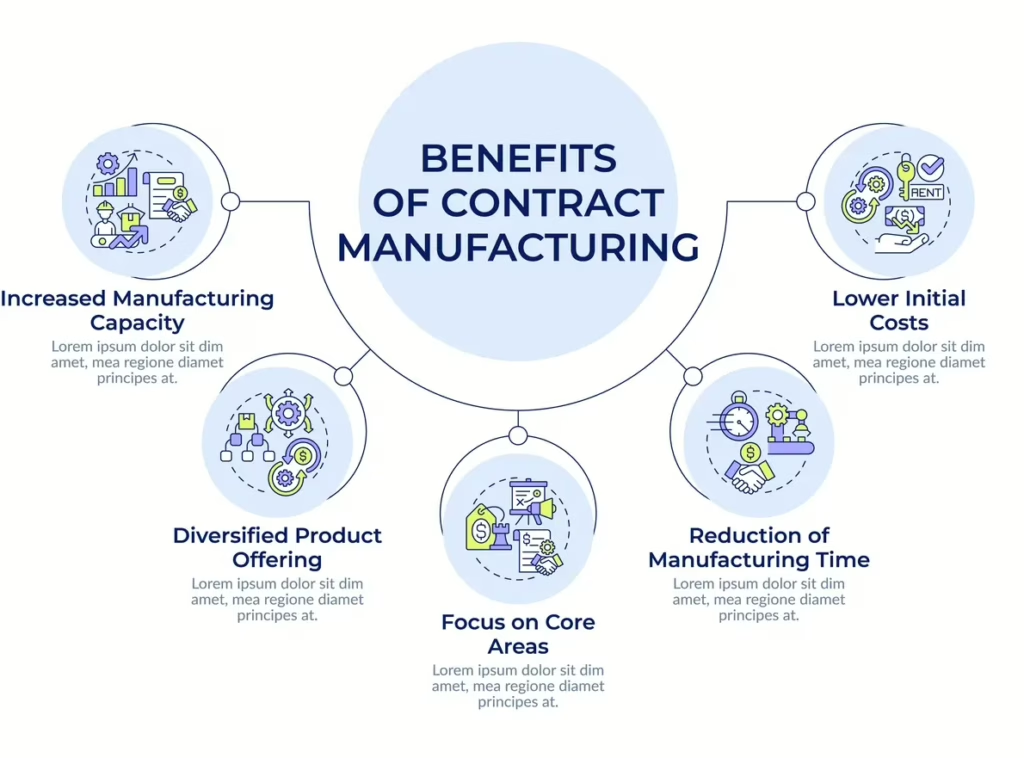
Benefits of Contract Manufacturing
Partnering with contract manufacturing companies offers serious operational advantages:
- Lower operational costs: Save money on labor, equipment, and facility maintenance.
- Access to advanced technology: Leverage state-of-the-art machinery you do not have to buy yourself.
- Faster time-to-market: Tap into existing supply chains to launch products faster.
- Scalability and flexibility: Easily adjust production volumes based on seasonal demand.
- Reduced risk in capital investment: Keep your cash flow free for marketing and research.
- Focus on core business functions: Spend your time on product development and sales.
Disadvantages of Contract Manufacturing
While beneficial, outsourcing does come with risks you must manage.
| Advantages | Disadvantages |
| Lower overhead costs | Less direct control over the production line |
| Rapid scalability | Quality consistency risks if the CMO cuts corners |
| Access to expert teams | Intellectual property and trade secret concerns |
| Faster market entry | Communication challenges with global partners |
| Reduced capital risk | Potential supply chain disruptions |
How to Choose the Right Contract Manufacturing Partner
Selecting the right partner dictates the success of your product. Look for these crucial elements:
- Certifications: Verify they hold necessary certifications like ISO, GMP, or FDA registrations.
- Industry expertise: Ensure they have proven experience in your specific niche. Check out the industries we serve at Valley Distribution & Logistics to see how specialized support aligns with manufacturing.
- Scalability: Ask if they can handle a sudden spike in your order volume.
- Communication and transparency: You need a partner who provides regular updates and is transparent about delays.
- Track record: Ask for case studies or references from previous clients.
Is Contract Manufacturing Right for Your Business?
Deciding whether to keep production in-house or outsource depends entirely on your business goals. If you need to scale rapidly, lack the capital for heavy machinery, or require highly specialized manufacturing expertise, outsourcing is likely the smartest path forward.
Evaluate your current production bottlenecks and financial resources. If you decide that outsourcing fits your growth plan, finding the right logistical and manufacturing support is your next step. Explore our contract manufacturing support services at ValleyDL to see how we can streamline your supply chain and help your brand thrive.
Contract Manufacturing FAQs
What is contract manufacturing?
Contract manufacturing is a business arrangement where a company hires a third-party manufacturer to produce its goods, parts, or products.
How does contract manufacturing work?
A brand provides the product specifications and signs an agreement with a manufacturer. The manufacturer then sources materials, produces the goods, runs quality checks, and prepares the product for distribution.
What is the biggest risk in global contract manufacturing?
The biggest risks include intellectual property theft, supply chain delays, and communication barriers across different time zones.
What industries use contract manufacturing the most?
The electronics, pharmaceutical, medical device, cosmetics, and dietary supplement industries rely heavily on outsourced manufacturing.
What is the difference between OEM and contract manufacturing?
An Original Equipment Manufacturer (OEM) designs and builds products that are often rebranded by another company. A contract manufacturer strictly builds products based on the specific designs and formulas provided by the hiring brand.